In the fast-paced digital landscape, website speed has become a make-or-break factor for businesses in London. With attention spans dwindling and competition intensifying, a slow-loading website can be the difference between capturing a lead or losing it forever.
Recent studies show that a mere 1-second delay in page load time can result in a 7% reduction in conversions. For London-based businesses, this translates to missed opportunities and a significant impact on the bottom line.
But the good news is that with the right strategies and tools, you can dramatically improve your website’s speed and performance, ultimately driving more leads, sales, and growth for your London business.
What Is Website Speed Optimisation?
Website speed optimisation is the process of improving the loading speed and performance of a website. This encompasses a range of techniques, from optimising images and minifying code to implementing caching and leveraging content delivery networks (CDNs).
The goal of website speed optimisation is to ensure that your website loads quickly and seamlessly, providing a smooth and enjoyable user experience for your visitors. By doing so, you can boost key metrics such as bounce rate, time on page, and conversion rate, ultimately driving more business success for your London-based company.
Why Is Website Speed Important for London Businesses?
In the highly competitive London market, a fast-loading website is not just a nice-to-have – it’s a critical component of success. Here are some of the key reasons why website speed is so important for businesses in the UK capital:
1. Improved User Experience: Slow-loading websites frustrate users and can lead to high bounce rates, as visitors simply get tired of waiting and leave. A fast, responsive website, on the other hand, creates a positive user experience that keeps people engaged and on your site.
2. Better Search Engine Rankings: Google and other search engines place a significant emphasis on website speed as a ranking factor. Faster sites are more likely to appear higher in search results, giving you a crucial edge over your competitors in London.
3. Increased Conversions: Studies have shown that even a 1-second delay in page load time can result in a 7% reduction in conversions. By optimising your website speed, you can capture more leads and drive more sales for your London business.
4. Improved Mobile Performance: With the majority of web traffic now coming from mobile devices, a fast-loading mobile website is essential. Optimising for mobile speed can ensure that your London-based customers have a seamless experience on-the-go.
5. Competitive Advantage: In a crowded London market, a fast-loading website can be a valuable differentiator. By outperforming your competitors in terms of speed and performance, you can position your business as the preferred choice for customers.

Step-by-Step Guide to Optimising Website Speed for London Businesses
Improving your website’s speed can seem like a daunting task, but with the right approach, you can make significant gains. Here’s a step-by-step guide to optimising website speed for your London-based business:
1. Conduct a Comprehensive Speed Audit
The first step in the website speed optimisation process is to conduct a thorough audit of your current website performance. Tools like Google PageSpeed Insights, Pingdom, and GTmetrix can provide detailed reports on your site’s loading time, core web vitals, and other key metrics.
These reports will highlight the specific areas that need improvement, such as unoptimised images, excessive JavaScript, or inefficient server configuration. By understanding the current state of your website, you can create a targeted optimisation plan.
2. Optimise Your Images and Media
Images and other media files are often the biggest contributors to slow website loading times. To address this, start by:
1. Compressing image files using tools like TinyPNG or Optimizilla, without sacrificing quality.
2. Implementing lazy loading to defer the loading of images until they’re needed.
3. Serving images in the correct format (e.g., WebP or JPEG) and size for each device.
4. Leveraging content delivery networks (CDNs) to serve media files from a server closer to the user’s location.
3. Minify and Optimise Your Code
Bloated, unoptimised code can also significantly slow down your website. To address this, you should:
1. Minify your HTML, CSS, and JavaScript files to remove unnecessary whitespace and comments.
2. Combine multiple CSS and JavaScript files into fewer, larger files to reduce the number of server requests.
3. Implement code-splitting to load only the necessary scripts and styles for each page.
4. Leverage browser caching to ensure that static assets are cached and don’t need to be downloaded on every page load.
4. Optimise Your Server Configuration
The way your website is hosted and served can also have a significant impact on its loading speed. Consider the following server-side optimisations:
1. Choose a web hosting provider that offers fast, reliable servers, preferably located in the UK.
2. Enable HTTP/2 or HTTP/3 to improve the efficiency of network communication.
3. Implement server-side caching, such as Varnish or Memcached, to reduce the load on your origin server.
4. Optimise your database queries and server-side processing to minimise the time required to generate dynamic content.
5. Leverage Content Delivery Networks (CDNs)
Content delivery networks (CDNs) can significantly improve website speed by serving static assets (like images, CSS, and JavaScript files) from servers located closer to the user. This reduces the physical distance between the user and the content, resulting in faster loading times.
Popular CDN providers like Cloudflare, Amazon CloudFront, and Google Cloud CDN offer affordable, scalable solutions that can be easily integrated with your London-based website.
6. Continuously Monitor and Optimise
Website speed optimisation is not a one-time event – it’s an ongoing process that requires regular monitoring and adjustment. Use tools like Google Analytics, Google Search Console, and Pingdom to track your website’s performance over time, and make continuous improvements to maintain a fast, efficient site.
Additionally, stay up-to-date with the latest web development best practices and industry trends, as new technologies and optimisation techniques are constantly emerging.
Key Takeaways
Tools and Resources for Website Speed Optimisation in London
Improving website speed can be a complex and technical process, but there are a variety of tools and resources available to help you along the way:
1. Google PageSpeed Insights: A free tool that provides detailed recommendations for improving the speed and performance of your website.
2. Lighthouse: An open-source, automated tool for improving the quality of web pages, including website speed and performance.
3. GTmetrix: A comprehensive website speed testing tool that provides detailed reports and analysis.
4. Pingdom: Another popular website speed testing tool that offers insights into your site’s performance.
5. WP Rocket: A premium WordPress plugin that provides a range of speed optimisation features, including caching, image optimisation, and minification.
6. Cloudflare: A leading content delivery network (CDN) that can significantly improve website speed and performance.
7. WebPageTest: A free tool that provides in-depth analysis of a website’s loading performance, including waterfall charts and performance metrics.

Pros and Cons of Website Speed Optimisation
Pros:
– Improved user experience and reduced bounce rates
– Better search engine rankings and organic traffic
– Increased conversion rates and sales
– Competitive advantage in the London market
– Reduced server load and hosting costs
Cons:
– Can be a complex, technical process that requires expertise
– Ongoing monitoring and maintenance is required to maintain optimal speed
– Optimisation efforts may impact website design or functionality
– Some speed optimisation techniques can have unintended consequences if not implemented correctly
Real-World Examples of Successful Website Speed Optimisation
Case Study: Luxury Furniture Brand in Central London
A high-end furniture retailer in central London was experiencing slow website loading times, which was negatively impacting their online sales. By implementing a comprehensive website speed optimisation strategy, including image optimisation, caching, and server-side improvements, they were able to reduce their average page load time from 8 seconds to just 2 seconds. As a result, their bounce rate dropped by 15%, and their conversion rate increased by 12%, leading to a significant boost in online revenue.
Case Study: Small Law Firm in East London
A local law firm in East London was struggling to attract new clients due to a slow, outdated website. After working with a web development agency to optimise their website’s speed, the firm saw a dramatic improvement in their core web vitals, including a 50% reduction in Largest Contentful Paint (LCP) time. This, in turn, led to a 25% increase in website traffic and a 18% boost in lead generation, helping the firm to expand their client base and grow their business.
Frequently Asked Questions
1. What are the recommended website speed targets for London businesses?
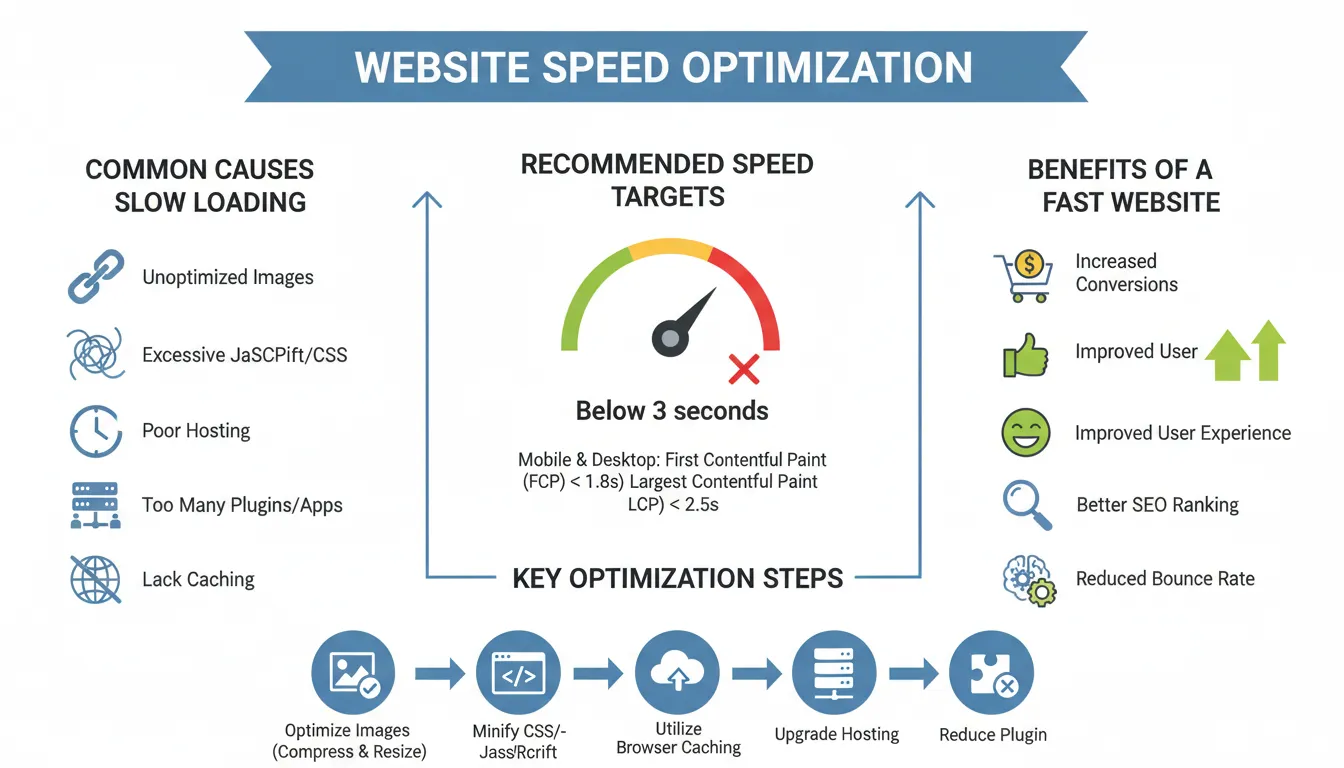
The recommended website speed targets for London businesses are:
– Load time: Under 3 seconds
– Largest Contentful Paint (LCP): Under 2.5 seconds
– First Input Delay (FID): Under 100 milliseconds
– Cumulative Layout Shift (CLS): Under 0.1
Achieving these targets will ensure your website provides a fast, smooth user experience and meets the performance expectations of your London-based customers.
2. What are the most common causes of slow website speed in London?
Some of the most common causes of slow website speed for London businesses include:
– Unoptimised images and media files
– Excessive JavaScript and CSS
– Poorly configured web server settings
– Outdated website technology or content management system
– Hosting on a slow or unreliable server
– Lack of content delivery network (CDN) integration
By addressing these issues through a comprehensive website speed optimisation strategy, you can significantly improve your site’s performance.
3. How much does website speed optimisation cost for London businesses?
The cost of website speed optimisation can vary widely depending on the size and complexity of your website, as well as the specific services and tools required. Generally, you can expect to pay:
– DIY optimisation tools and plugins: £50 – £300 per year
– Professional website speed audit: £500 – £2,000
– Ongoing website maintenance and optimisation: £500 – £2,000 per month
– Migration to a faster web hosting provider: £500 – £2,000 one-time fee
It’s important to remember that the investment in website speed optimisation can pay off significantly in the long run through improved user experience, higher conversion rates, and better search engine rankings.
4. How long does it take to see results from website speed optimisation?
The timeline for seeing results from website speed optimisation can vary depending on the current state of your website and the specific optimisation strategies implemented. In general, you can expect to see:
– Immediate improvements: After implementing quick fixes like image optimisation or minifying code, you may see a noticeable difference in your website’s loading times within a few hours or days.
– Gradual improvements: More complex optimisation efforts, such as server-side caching or CDN integration, may take a few weeks to fully take effect and show improvements in your website’s core web vitals and overall performance.
– Long-term benefits: Ongoing monitoring, maintenance, and continuous optimisation can lead to sustained improvements in your website’s speed and user experience over time, often resulting in higher search engine rankings, increased conversions, and greater overall business success.
The key is to approach website speed optimisation as an ongoing process, rather than a one-time fix. By regularly monitoring your website’s performance and making incremental improvements, you can ensure that your London business maintains a fast, efficient online presence.
Conclusion
In the competitive landscape of the London business market, a fast-loading website is no longer a nice-to-have – it’s an essential requirement for success. By optimising your website’s speed and performance, you can create a smooth, enjoyable user experience, improve your search engine rankings, and drive more leads and sales for your London-based business.
Don’t let a slow website hold your business back. Implement the strategies outlined in this guide, and take the first step towards unlocking your London business’s full potential online. If you need further assistance, consider requesting a speed audit to get a detailed plan for optimising your website’s performance.