Your event planning business is thriving. You’ve built a reputation for delivering flawless celebrations. But there’s a problem. Prospective clients can’t find you online. Or worse, they find your website and it doesn’t inspire confidence.
The statistics are sobering. According to recent research, 73% of engaged couples research wedding vendors online before making contact. For corporate event planners, the figure is even higher—businesses spend an average of 15 minutes researching event management companies before requesting a proposal. Your website isn’t just a nice-to-have anymore. It’s your most important salesperson.
Here’s the challenge: event planning is a visual, trust-based business. A generic website template won’t cut it. You need a platform that showcases your portfolio, demonstrates your expertise, and makes enquiries effortless. Generic sites lose bookings. Specialised event planner web design wins them.
In London alone, the event planning industry generates £2.3 billion annually. Yet most event planners are operating with outdated websites, unclear pricing, complicated booking processes, and mobile-unfriendly designs. These aren’t small issues. They’re revenue killers.
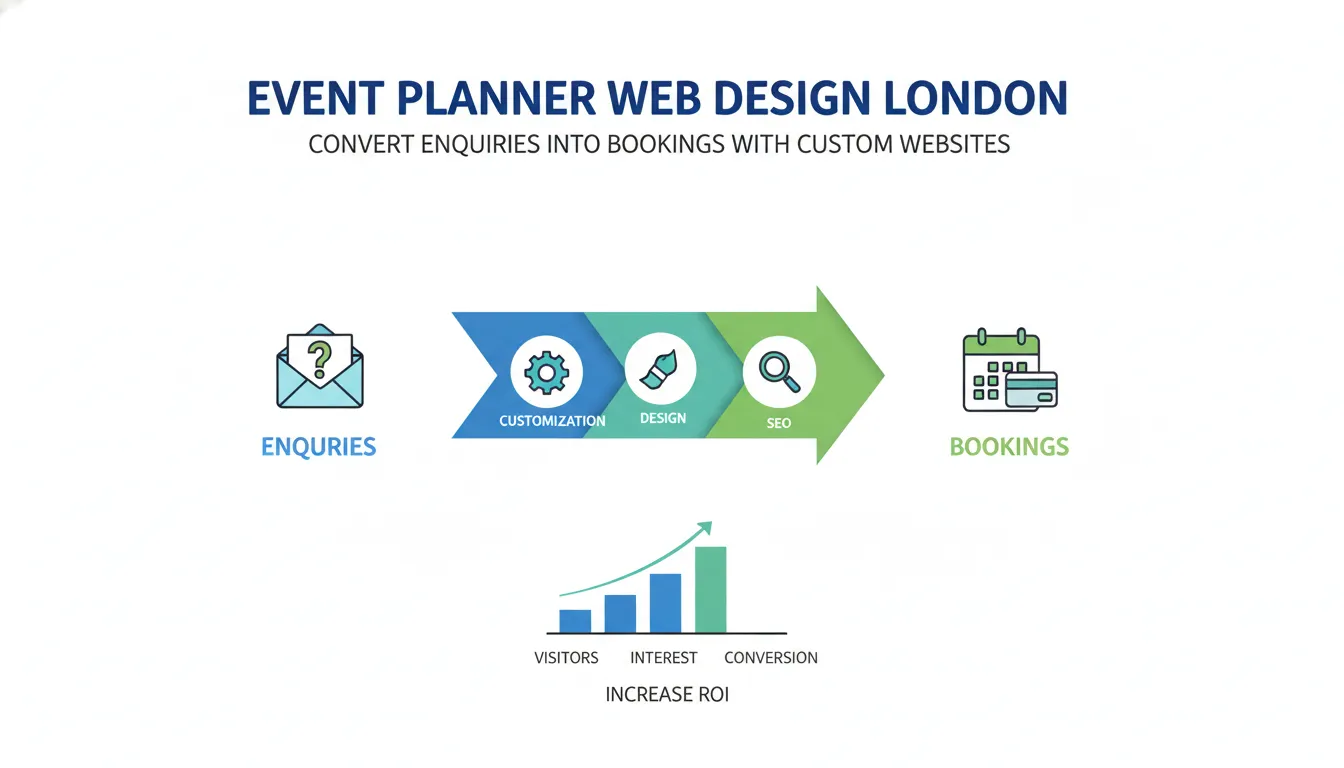
Key Takeaways
This guide reveals exactly how professional event planner web design in London converts browsers into bookings. We’ll walk you through what works, how to build it, and why the investment pays for itself in the first month.

What Is Event Planner Web Design and Why London Event Planners Need It
Event planner web design isn’t just a pretty website. It’s a conversion machine designed specifically for the event planning industry. It solves problems that generic web templates simply can’t address.
A standard website might look nice. But an event planning website needs to do something very different. It needs to:
Showcase Your Portfolio Powerfully. Event planning is visual. Clients want to see exactly what you’ve delivered before—not read about it. Professional event planner web design integrates stunning galleries, video walkthroughs, and before-and-after transformations that prove your capability.
Build Instant Trust. Event planning requires enormous trust. You’re managing the biggest day in someone’s life. Client testimonials, credentials, insurance information, and previous work need to be prominent and credible. A well-designed event planner website makes this trust-building happen automatically.
Streamline Enquiries. The current industry standard is still email-based enquiry processes. Outdated. Inefficient. A modern event planner website captures enquiries through optimised forms, automatically qualifies leads, and sends instant confirmations. This reduces back-and-forth and speeds up conversions.
Display Transparent Pricing. Mystery pricing kills bookings. Couples and corporate planners want to understand investment ranges upfront. Professional event planner web design displays package options, pricing tiers, and what’s included at each level.
Mobile Optimisation. 87% of engaged couples research vendors on mobile devices. Yet many event planning websites still prioritise desktop viewing. Proper event planner web design is mobile-first.
Search Engine Visibility. Most event planning enquiries begin with “event planner near me” or “wedding planner London.” Your website needs to rank for these searches. Specialised event planner web design includes technical SEO, local keyword targeting, and structured data that helps London event planners get discovered.
In London specifically, you’re competing in one of the world’s most expensive real estate markets. Your website needs to justify your pricing, showcase luxury and professionalism, and convert quickly. Generic templates don’t do this. Specialised event planner web design does.
Step 1: Defining Your Event Planner Web Design Requirements
Before building anything, you need clarity. What type of events do you specialise in? What’s your ideal client profile? What’s your unique positioning? These questions determine your website’s entire architecture.
Identify Your Specialisation. Are you a wedding planner? Corporate event specialist? Social celebration expert? Destination event coordinator? Your specialisation determines your messaging, gallery content, and positioning. A website selling to corporate clients looks completely different from one targeting engaged couples. Corporate clients want efficiency metrics, client lists, and scalability. Couples want romance, personal attention, and emotional resonance.
Define Your Service Packages. Most event planners offer tiered services. Full-service planning (start to finish). Day-of coordination (logistics only). Partial planning (select services). Each tier needs clear boundaries and pricing. Your website should make it obvious which package suits which client profile.
Establish Your Visual Identity. Event planning is aesthetic-driven. Your website’s colour palette, typography, and imagery must align with your brand. A luxury wedding planner needs different visual language than a corporate event specialist. Your web design should reflect your market position and client expectations.
Map Your Ideal Client Journey. How does a prospect typically find you? They search online → land on your site → view your portfolio → check pricing → complete an enquiry form → you follow up. Every step needs optimisation. If your gallery takes 30 seconds to load, some prospects will bounce. If your pricing is unclear, they’ll message a competitor. If your enquiry form has 20 fields, they won’t complete it.
Audit Your Current Situation. Do you have an existing website? How’s its performance? Check your Google Analytics. What pages get visited? Where do visitors drop off? How many enquiries come from your website? These metrics inform your new design priorities.
Determine Your Budget and Timeline. Professional event planner web design doesn’t require massive budgets. London-based specialists offer quality sites from £499 with launch within 7 days. But you need clarity on what features matter most. Gallery functionality? Booking system integration? Email marketing automation? SEO optimization? Your budget determines which features get prioritised.
Professional event planner web design should be treated like any other business investment. What’s the ROI? If you currently get 5 website enquiries monthly and book 1 client from those enquiries, that’s valuable baseline data. A properly designed website might increase enquiries to 15 monthly, with a 40% booking rate. That’s tangible revenue impact.
Step 2: Essential Features Every Event Planner Website Must Include
Not all websites are created equal. Event planner websites need specific features that drive conversions and streamline operations.
Professional Portfolio Gallery. This is non-negotiable. Your gallery isn’t just image dumps. It’s storytelling. Each event should show the full scope—ceremony setup, reception décor, special moments, guest experiences. Organise galleries by event type (weddings, corporate, social celebrations). Include captions that explain the challenge solved and result delivered. High-resolution images are essential. Grainy or poorly lit photos undermine credibility instantly.
Pricing and Package Pages. Mystery pricing loses bookings. Create clarity. Show 2-3 service tiers with specific inclusions. Example:
– Essential Planning Package (£2,500 – £4,000): 3-month lead time. Partial planning. Vendor coordination. Day-of timeline. Basic décor consultation.
– Complete Planning Package (£5,000 – £8,000): 6-month lead time. Full planning from concept. Venue selection. Vendor management. Design direction. Unlimited consultations.
– Premium Planning Package (£10,000+): 12-month lead time. Full luxury planning. Destination coordination. Bespoke design. Concierge service.
Transparency builds trust. Pricing also allows self-qualification. Couples under budget know they don’t fit your service model.
Client Testimonials and Case Studies. “Worked with 200+ couples” is vague. “Sarah and Tom: Indian wedding in Mayfair for 150 guests. 8-month planning. £35,000 budget. Client testimonial: ‘She managed everything flawlessly. We relaxed and enjoyed our celebration.'” This is powerful. Include real names, event details, and quotes. Photos of happy clients are even better.
Quick Enquiry Form. Don’t ask for 20 fields. Start with:
– Name
– Email
– Phone
– Event date
– Event type
– Guest count
– One question: “What’s your biggest priority?”
Collect minimal information upfront. Gather detailed requirements during consultation calls.
About Section. Event planning is relationship-based. Clients want to know who they’re hiring. Your About section should include your story, experience, credentials, and what makes you different. Include a professional headshot. Make yourself relatable and credible simultaneously.
Service Pages. Create dedicated pages for each service. Wedding Planning. Corporate Events. Social Celebrations. Destination Planning. Each page should answer service-specific questions and showcase relevant portfolio pieces.
Testimonial Video. Text testimonials are good. Video testimonials are exceptional. A 30-second clip of a happy couple saying “She made our wedding day perfect” converts better than paragraphs of text.
Contact and Booking Information. Make contact effortless. Include phone number, email, enquiry form, and social media links. For London event planners, adding your location details helps with local search visibility.
Mobile Responsiveness. This isn’t optional. 87% of couples research on mobile. Your gallery should load quickly. Forms should be easy to complete on smartphones. Navigation should be intuitive on small screens.
Step 3: Optimising Your Event Planner Website for Search Visibility
You’ve built a beautiful website. Now nobody can find it. Search engine optimization (SEO) solves this problem.
Event planners typically compete for these keywords: “wedding planner London,” “event planner London,” “corporate event planner London,” “wedding coordinator London,” and location-specific variations. Professional event planner web design includes SEO strategy from the start.
Local SEO Fundamentals. Google prioritises local results. When someone searches “event planner near me” or “wedding planner in Kensington,” Google returns local businesses. To rank locally:
– Claim and optimize your Google Business Profile. Add accurate address, phone number, hours, photos, and services.
– Create location-specific pages if you serve multiple London areas. “Wedding Planning in Mayfair,” “Corporate Events in Canary Wharf,” etc.
– Build local citations. Get listed in local event planning directories, London business directories, and wedding vendor sites.
– Earn local backlinks. Get featured in London event blogs, wedding magazines, and local press.
On-Page Optimization. Each page needs optimization:
– H1 Tags: Use keywords naturally. “Wedding Planning in London” or “Corporate Event Planning Services.”
– Meta Descriptions: Write compelling 155-character descriptions. “Professional wedding planner in London. 15+ years experience. From £3,000. Get a free consultation.”
– Image Alt Text: Describe portfolio images for accessibility and SEO. “Elegant outdoor wedding reception in Kew Gardens with 120 guests.”
– Internal Linking: Link between related pages. Link from your About page to your Service pages to your Portfolio.
– Keyword Density: Use keywords naturally throughout content. Avoid stuffing.
Content Strategy. A blog section is valuable. Event planners reading content might not book immediately, but they build trust and authority. Write about:
– “Wedding Planning Timeline: 12 Months Before to 1 Day Before”
– “Corporate Event Planning Checklist for 100+ Guests”
– “London Wedding Venues: Complete Venue Guide”
– “Budget Planning for Events: What You Actually Need to Spend”
This content ranks for informational searches and keeps prospects engaged before they’re ready to book.
Technical SEO. Behind-the-scenes optimization:
– Site Speed: Compress images. Use a content delivery network. Aim for under 3-second load times.
– Mobile Optimization: Use responsive design. Test on multiple devices.
– Schema Markup: Implement LocalBusiness schema. Add your location, phone, address, hours. This helps Google understand your business type.
– Sitemap and Robots.txt: Help search engines crawl your site efficiently.
Backlink Building. High-quality backlinks signal authority. Get featured in:
– London event planning blogs
– Wedding and corporate event magazines
– Local London business directories
– Industry association websites
One backlink from a reputable London wedding magazine is worth 50 from low-quality directories.
For London event planners, SEO is long-term investment. Within 3 months, you should see improved visibility. Within 6 months, you should rank for 20+ target keywords. Within 12 months, organic enquiries become a reliable revenue channel.
Step 4: Conversion Optimization—Turning Visitors into Enquiries
Traffic is worthless if it doesn’t convert. You need 50 qualified website visitors monthly to generate 1-2 bookings. You probably need 100+ visitors to achieve that. Professional event planner web design doesn’t just attract visitors—it converts them.
Optimize Your Enquiry Form. The form is your conversion point. Optimise it ruthlessly:
– Reduce fields to absolute minimum (3-4 initially)
– Place forms above the fold on key pages
– Use clear, benefit-driven copy: “Get Your Free Planning Consultation” not “Contact Us”
– Add trust signals: “We respond within 2 hours”
– Test variations (does your form get more submissions with a phone field or without?)
Create a Clear Value Proposition. When someone lands on your site, they need to instantly understand what you do and why you’re the right choice. Your homepage headline should be specific: “Wedding Planning for London Couples Who Want a Stress-Free Celebration” or “Corporate Event Planning That Impresses Your Attendees.” Generic headlines like “Professional Event Planning Services” don’t convert.
Use Social Proof Strategically. Testimonials, case studies, and reviews are conversion boosters. Place them throughout your site:
– Homepage: Feature your best testimonial
– Service pages: Show case studies for that specific service
– Before booking: Display recent client reviews
Implement Clear CTAs (Calls to Action). Don’t assume visitors know what to do next. Use clear, benefit-driven CTAs:
– “Get Your Free Planning Consultation”
– “Book a 20-Minute Planning Call”
– “See Our Latest Weddings”
– “Check Availability for Your Date”
Include CTAs on every major page. Repeat them. Some visitors need to see an offer 3-4 times before acting.
Optimize for Mobile Conversion. Mobile traffic is high. Mobile conversion matters more. On mobile:
– Make forms easy to complete with minimal typing
– Use larger buttons (thumb-friendly)
– Show phone number prominently. Click-to-call should work.
– Reduce image sizes so pages load fast
– Simplify navigation
A complex form that takes 5 minutes on desktop takes 15 minutes on mobile. Prospects abandon it.
Test Everything. Conversion optimization is iterative:
– A/B test headlines (“Professional Wedding Planning” vs “Stress-Free Wedding Planning”)
– A/B test CTAs (different colours, wording, placement)
– A/B test form variations
– Monitor which pages get enquiries
– Double down on what works
Step 5: Launch, Marketing, and Ongoing Optimisation
Your website is built. Now what?
Launch Strategy. A quality event planner website from a London specialist should be live within 7 days. Before launch:
– Test all forms. Submit test enquiries and confirm they work.
– Test on multiple devices and browsers.
– Verify all links work.
– Check page speed.
– Verify Google Business Profile integration.
Announce Your New Site. Tell people it exists:
– Email your past and current clients
– Post on social media (Instagram, LinkedIn)
– Update your Google Business Profile
– Tell enquiring prospects about your new site
Monitor Performance. Track metrics that matter:
– Website traffic (Google Analytics)