Your speaking career lives and dies by the quality of your digital presence. You could deliver the most transformative keynote in the world, but if your website doesn’t convert event organisers into bookings, your calendar stays empty. According to recent industry data, 87% of event planners research speakers online before making contact. Even more critical: 64% of those planners will abandon a speaker’s website if it doesn’t clearly show how to book or lacks social proof. This isn’t about vanity—it’s about revenue. A professional speaker website in London isn’t a nice-to-have. It’s your 24/7 sales team, working while you sleep, turning curious organisers into confirmed bookings. We’ve helped hundreds of UK speakers and trainers build booking pages that actually work. From headline optimisation to media galleries that showcase your impact, we know exactly what converts. And we do it fast—your site launches in 7 days, starting from just £499.
What Is Speaker Web Design and Why Your Current Site Isn’t Enough
Speaker web design is a specialised niche. It’s not the same as building a restaurant website or an e-commerce store. Your website serves one primary purpose: to convince meeting planners, conference organisers, and corporate HR teams that you’re the right person to hire. This means every element—from your hero section to your testimonials—must be engineered for conversion.
Most speaker websites fail because they’re either too generic or they focus on the wrong things. We see trainers who spend 60% of their homepage talking about their background and only 10% on booking information. We see keynote speakers with beautiful galleries but no clear call-to-action. We see brilliant presenters whose websites look like they were designed in 2015.
A proper speaker website in London does five critical things. First, it establishes credibility instantly. Within three seconds of landing on your site, a meeting planner should know you’re the real deal. That means visible testimonials, logo clients, speaking statistics, or press mentions right at the top. Second, it showcases your speaking style. Video is non-negotiable. A 60-second reel of you in action is worth 1,000 words about your credentials. Third, it makes booking frictionless. An event organiser shouldn’t need to hunt for your contact form. Fourth, it’s mobile-optimised. 68% of booking inquiries come from mobile devices. A slow, poorly-designed mobile experience loses deals. Fifth, it’s optimised for search. If someone types “keynote speaker London” or “corporate trainer UK,” you need to rank. Speaker web design bridges the gap between professional credibility and practical conversion mechanics.
The Five Essential Pages Every Speaker Website Needs
Before diving into design specifics, understand that your speaker website needs a strategic structure. Not all pages are equal. Some drive direct bookings. Others build trust. Some serve SEO purposes. Together, they form a complete system that turns curious organisers into paying clients.
The Homepage: Your 10-Second Audition
Your homepage is where 90% of your conversion happens. It gets roughly five seconds before a meeting planner decides whether to dig deeper or bounce. That’s it. No time for clever copywriting or lengthy introductions. Your homepage must answer three questions immediately: Who are you? What do you do? How do I book you?
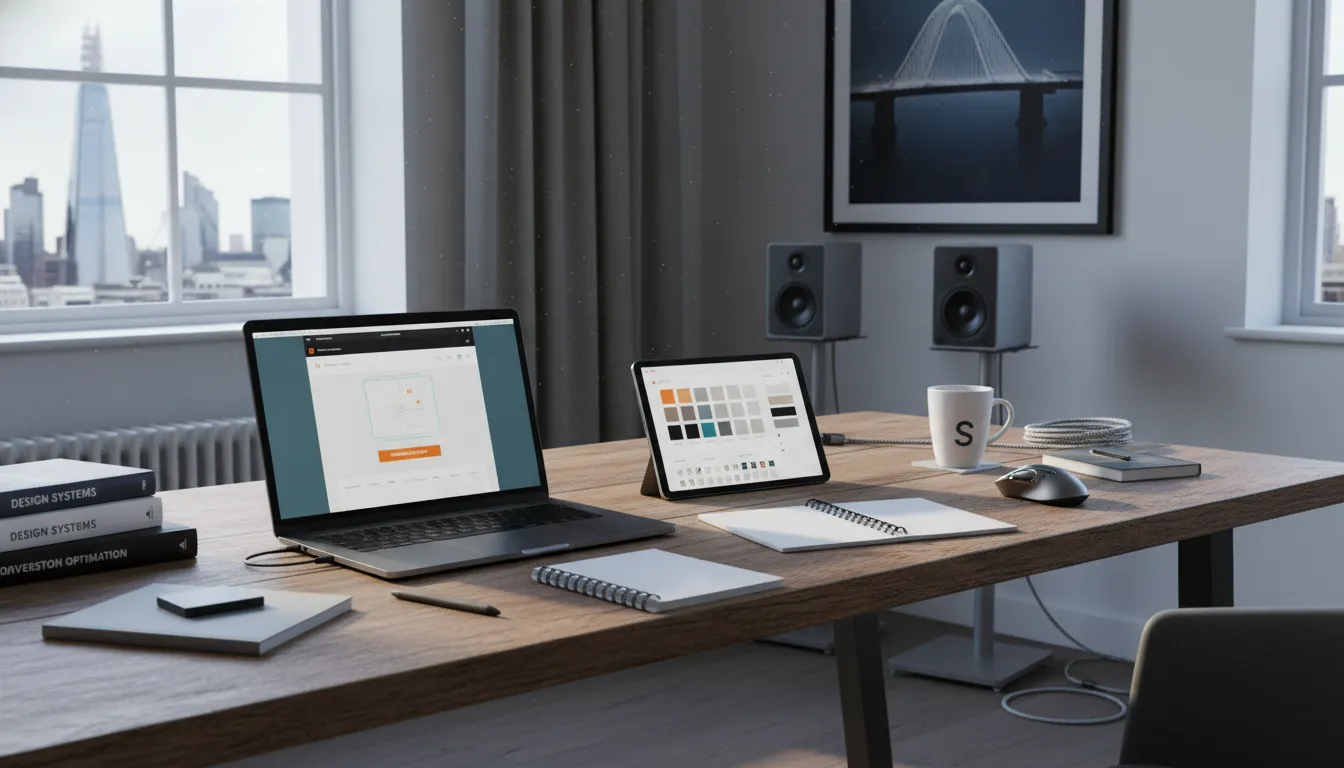
The best speaker homepages in London follow a proven structure. Hero image of you speaking, paired with a compelling headline that speaks directly to your ideal client. Not “World-Class Speaker” (generic). But “Transform Your Sales Team in 90 Minutes: The Proven Framework Used by 200+ Companies” (specific). Below that, a short value proposition—two or three sentences max—explaining the transformation your audience experiences. Then, immediately visible, a call-to-action button. “Check Availability” or “Book a Consultation.” Make it impossible to miss.
Below the fold, you need social proof. Testimonials are critical. But they must be specific. Not “Amazing presenter!” but “Increased team productivity by 34% in Q2 following John’s workshop. Would 100% book again. —Sarah, HR Director, FTSE 100 Company.” Numbers matter. If you’ve spoken at 50 events, say so. If you’ve trained 5,000 professionals, make it visible. A London-based speaker’s homepage should include logos of recognisable clients or event brands. These act as trust signals.
Finally, your homepage needs a video. A 60-second highlight reel of you speaking. Not a polished advert. Real footage. You on stage, connecting with an audience, delivering value. People book speakers based on energy and delivery style. Your video proves you’ve got both.
The Speaking Topics / Services Page: Demonstrate Flexibility
Many speakers offer multiple topics or focus areas. Some deliver keynotes. Others run workshops. Some do both. Your services page proves you can adapt to different event types and audience needs.
This page should be structured by offering type, not by topic alone. For example: “60-Minute Keynotes for Sales Conferences,” “Interactive Half-Day Workshops,” “Virtual Speaking Engagements,” “Executive Roundtables.” For each, include the format, ideal audience size, key outcomes, and a rough fee indication (if you’re comfortable being transparent—many speakers do this to filter inquiries).
Within each service type, list your available topics. But here’s the key difference from other websites: each topic needs a brief description of outcomes, not just a catchy title. Not “Resilience in the Workplace,” but “Resilience in the Workplace: How to Build Teams That Thrive Under Pressure—Proven Frameworks Used by Emergency Services and Military Units.”
This page serves a dual purpose. It helps meeting planners quickly identify which speaking format fits their event. And it’s gold for SEO. Each topic becomes a keyword opportunity, helping you rank for searches like “keynote speaker on innovation London” or “resilience training for corporate teams.”
The Testimonials and Results Page: Let Your Clients Speak
This is where conversion happens. A dedicated page for testimonials, client logos, and quantified results is non-negotiable for speaker websites.
Structure this page in three sections. First, full-length video testimonials. These are worth their weight in gold. Reach out to three or four past clients and ask them to record a 30-second testimonial on their phone, speaking directly to the camera about the impact of your speaking. Audio doesn’t need to be perfect. Authenticity matters more than production quality. Second, written testimonials with photos and job titles. These should be specific, quantified, and attribution-heavy. Include the client’s name, company, and role. Third, a results section with hard numbers. “200+ Events,” “15,000+ Professionals Trained,” “47 Returning Clients in 2023,” “Average Satisfaction Rating: 4.8/5.”
If you’ve been featured in press, podcast, or publications, include a “As Seen In” section with logos. Not only does this build credibility, it’s a visual trust accelerator. Potential clients think, “If major brands trust this speaker, they’re legitimate.”
The Media / Speaker Reel Page: Showcase Your Style
This page is your portfolio. It’s where meeting planners and event organisers go to see you in action across different contexts.
Include multiple video clips from different speaking engagements. Ideally, you want variety: a keynote from a large conference, a workshop facilitating a smaller group, perhaps a virtual speaking session. This shows your adaptability. Each video should be 30 seconds to 2 minutes—long enough to demonstrate style and delivery, short enough to hold attention.
Complement videos with high-resolution photos from past speaking engagements. These should be professional (hired photographer, good lighting) but candid. Action shots of you engaging with the audience, not stiff headshots. Include a few behind-the-scenes photos of setup, meeting organizers, or audience reactions.
If you have case studies from specific events—quantified results from a workshop, feedback forms, attendance numbers—include summaries here. “Tech Conference 2023: 1,200 Attendees, 92% Would Recommend This Speaker.”
This page is optimized for meeting planners who want to evaluate you before making a commitment. Make it visually rich and emotionally engaging.
The Booking / Contact Page: Remove Every Barrier to Enquiry
This page must be the easiest part of your website to navigate. If someone wants to book you, the path should be clear and friction-free.
Include a contact form, but more importantly, include your calendar. Use booking software like Calendly, Acuity Scheduling, or a custom integration that shows your availability in real time. Meeting planners want to book immediately. If they have to email you and wait for a response, you lose momentum. A visible calendar (even if it just links to a scheduling tool) removes this barrier.
Provide multiple contact methods. Email, phone, contact form, and a link to your calendar. Some organisers prefer calling. Some prefer submitting a form. Accommodate all preferences.
Include a quick FAQ addressing common questions: Lead time for booking (e.g., “We recommend 8-12 weeks notice but can accommodate rush requests”), geographic radius (“Available for UK events, international travel negotiable”), fee structure (“Fees start at £2,000 plus travel; custom quotes available”), and cancellation policy.
Make it absolutely clear what happens after someone submits an enquiry. “We’ll confirm receipt within 24 hours and schedule a call to discuss your event requirements.” This removes uncertainty.
Step-by-Step: Building a Speaker Website That Converts in 7 Days
Launching a speaker website in seven days sounds ambitious. But it’s possible when you have a clear process and you’re not overthinking design choices. Here’s exactly how we do it.
Day 1: Strategy and Content Audit
Before any design work, we interview you. We need to understand your speaking topics, ideal client profile, typical event types, average fee range, and conversion goals. Are you trying to book more £5,000 keynotes? Or are you building a training business with £15,000+ workshops? This changes everything about messaging and positioning.
We also audit your existing web presence. What are you currently ranking for? What testimonials do you have? What video footage exists? We create a content inventory. This saves days of back-and-forth during the design phase.
Day 2: Homepage and Page Structure
We create wireframes (basic layouts) for your homepage and key pages. This is where messaging gets locked in. Your headline. Your value proposition. Your call-to-action. Your testimonial strategy. We build a sitemap: which pages you need and in what order. Most speaker sites need 5-7 pages: Homepage, About/Bio, Speaking Topics, Media/Videos, Testimonials, Blog (for SEO), and Contact/Booking.
Day 3-4: Design and Content Creation
This is where your site comes to life visually. We use a proven template structure (not a generic template, but a framework we’ve developed specifically for speakers) and customise it to your brand. We source or optimise images, embed video, and format testimonials. We write or refine copy for each page, focusing on conversion language. No fluff. Every sentence serves a purpose.
Day 5: Booking Integration and Technical Setup
We integrate your booking system. This might be a calendar tool, a simple contact form, or a more sophisticated event management system. We set up your email so inquiries arrive reliably. We configure SEO basics: meta descriptions, heading structure, keyword optimisation. We ensure your site is mobile-responsive and fast-loading.
Day 6: Content Population and Video Integration
All remaining content goes live. Testimonials, videos, photos, speaker reel. We optimise video embedding so pages load quickly. We create a blog structure if you want ongoing SEO benefit.
Day 7: Testing, Refinement, and Launch
We test everything. Forms, links, video playback, mobile experience, booking integration. We make refinements based on testing. We brief you on how to update content, add new testimonials, or manage your calendar. Then, it goes live.
This timeline works because we’re not building from scratch. We’re using proven frameworks, templates, and integrations. We’re focused on conversion, not complexity.
Tools, Platforms, and Technical Stack
Building a professional speaker website doesn’t require expensive custom development. The right combination of proven tools gets you 95% of the way there.
Website Builders and CMS Platforms
For speaker websites, we typically use WordPress with a modern theme, or Webflow for full design flexibility. WordPress is cost-effective (£100-200/year for hosting) and SEO-friendly. Webflow costs more (£12-36/month) but gives more design control without requiring code. For speakers on a tight budget, Squarespace (£100-300/year) is a solid middle ground.
Avoid no-code builders like Wix or GoDaddy for speaker sites. They limit SEO potential and booking integrations.
Booking and Calendar Integration
– Calendly: Free up to a point. Simple, integrates easily. Good for phone or video consultations before formal booking.
– Acuity Scheduling: More sophisticated. Allows client forms, payment processing, automated reminders. £13-45/month.
– Zapier or Make: Connects your booking form to your email, CRM, or calendar. Automates follow-ups.
Video Hosting
– Vimeo: Professional video hosting. Better embed options than YouTube for branded sites. £6-600/month depending on plan.
– YouTube: Free. Less sleek visually but SEO-friendly and reliable.
Email and CRM
– ConvertKit or Mailchimp: Captures emails from your site. Automates follow-up sequences. Free to paid tiers.
– HubSpot CRM: Tracks inquiries, manages follow-ups, integrates with your website. Free CRM tier is robust.
SEO Tools
– Semrush or Ahrefs: Keyword research, rank tracking, competitive analysis. Essential for speaker sites targeting specific keywords. £99-199/month.
– Yoast SEO: WordPress plugin that guides on-page optimisation. Free to £99/month.
Analytics
– Google Analytics 4: Free. Essential for understanding visitor behaviour and conversion paths.
– Hotjar: Heat maps and session recordings showing how visitors interact with your site. £32-99/month.
Total First-Year Cost Breakdown for a Professional Speaker Website
| Element | Cost | Notes |
| ——— | —— | ——- | <br /> |
|---|---|---|---|
| Design & Build (One-Time) | £499-1,500 | Includes 7-day template build or custom design | |
| Domain & Hosting | £100-250/year | UK .co.uk or .com domain + managed hosting | |
| Booking/Calendar Tool | £0-45/month | Calendly free or Acuity Scheduling | |
| Video Hosting (Vimeo) | £0-72/year | Optional for professional touch | |
| Email CRM | £0-29/month | Mailchimp free or ConvertKit entry tier | |
| SSL & Security | £0 | Included with hosting | |
| Annual Total | £800-2,500 | Varies by choices and volume |
For most professional speakers, £1,200-1,800 in the first year covers everything. After the initial build, ongoing costs are typically £200-400/year.
Pros and Cons of Building a Speaker Website vs. Alternatives
Pros of a Professional Speaker Website
✅ 24/7 Sales Mechanism: Your website works while you’re on stage. Event organisers can visit, learn about you, and submit inquiries any time.
✅ Establishes Immediate Credibility: A professional site signals you’re serious about your speaking business. Scammy speakers have scammy websites.
✅ Customisation and Brand Control: Unlike relying on LinkedIn alone or a speaker directory, you own your web presence. You control messaging, visuals, and user experience.
✅ SEO Benefits: A well-built site ranks for relevant keywords. “Keynote speaker London” or