Your veterinary clinic or pet service business is great at what you do. But here’s the problem: 78% of UK pet owners search online before booking their vet. If your website doesn’t look professional, load quickly, or make booking easy, they’re clicking to your competitor instead.
A poorly designed vet website costs you real money. Lost appointments. Lost revenue. Worse: lost trust. Pet owners are emotional about their animals. They want to feel confident you’re the right choice. Your website has seconds to prove it.
The good news? Professional vet web design in London doesn’t have to be expensive or complicated. At WDLON, we’ve built over 200 websites for London pet service businesses—from small clinics to large animal hospitals. Our websites are live in 7 days. Prices start at just £499. And they convert.
This guide will show you exactly what makes a vet website work. How to build trust online. How to get more appointments booked. And how to compete with larger practices in London.
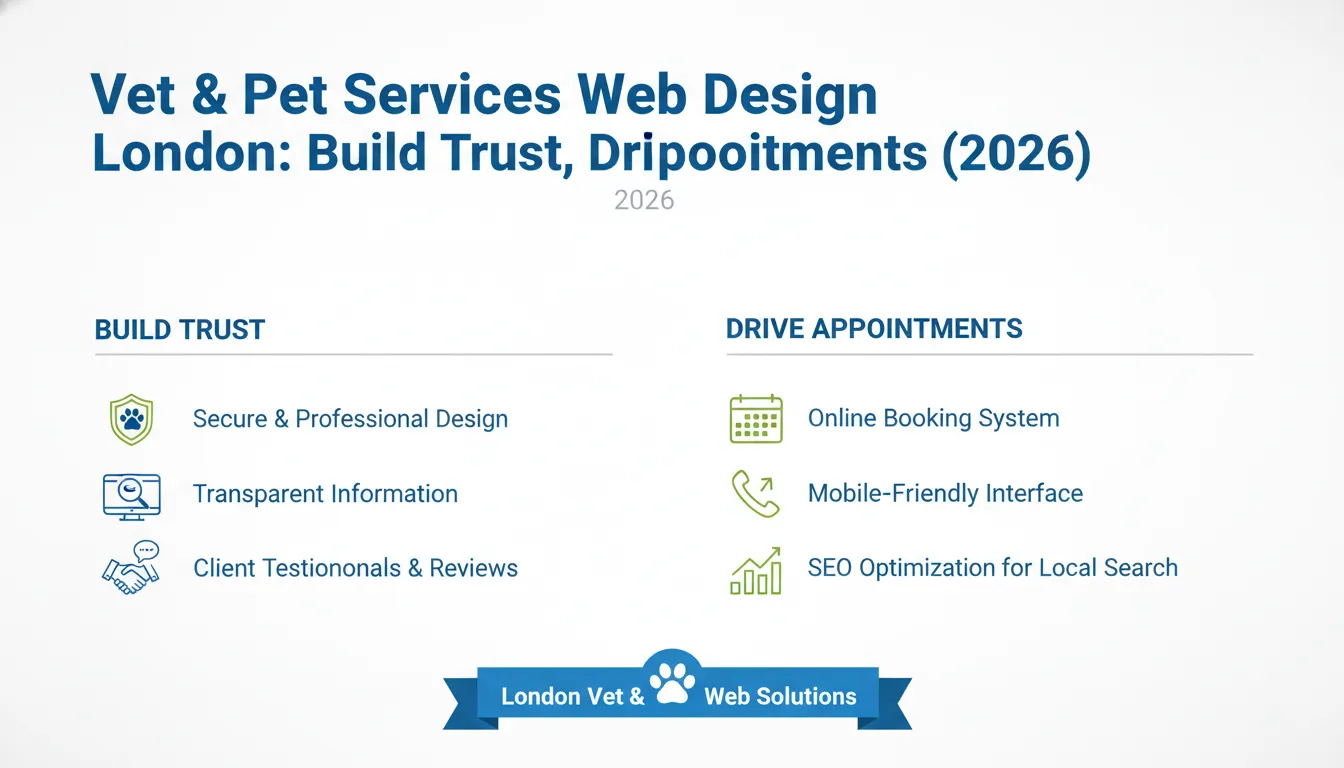
Key Takeaways
What Makes a High-Converting Vet Website Different
A vet website isn’t like a general business website. Pet owners have specific needs. They’re anxious, protective, and searching for reassurance. Your website has a different job than a plumber’s or accountant’s.
Here’s what separates a website that books appointments from one that just sits there:
Trust signals come first. Vet websites must display credentials, qualifications, staff photos, and reviews prominently. People trust who they see. They trust real testimonials from real pet owners. They trust clear information about services and prices. A blurry logo and vague “contact us” text doesn’t cut it.
Speed matters more. Pet owners are stressed. They’re googling “emergency vet near me” or “dog won’t eat” at 10 PM. If your site takes 5 seconds to load, they’ve already left. Mobile speed is critical—over 60% of vet searches happen on phones.
Appointment booking must be frictionless. The easier you make it to book, the more appointments you’ll get. A clunky contact form with a 24-hour wait for a callback loses business to competitors with instant booking systems.
Local SEO is essential. A generic website ranks nowhere. A website optimized for “emergency vet in Clapham” or “pet grooming in Canary Wharf” brings in real local traffic. Most vet searches include location. If you’re not ranking for your area, you’re invisible.
Reviews and social proof are non-negotiable. New pet owners decide based on what others say. Five 5-star reviews from real customers beat any marketing copy you could write. Your website should display Google reviews, testimonials, and case studies (with permission).
A high-converting vet website combines all of these. It’s not just pretty—it’s built to convert visitors into booked appointments.
Step 1: Design a Website Structure That Builds Trust
Your vet website’s structure isn’t decorative. It’s functional. It guides visitors toward one goal: booking an appointment. Everything on your site should serve that purpose.
The homepage must answer the visitor’s first question in three seconds. They land on your site. Their brain asks: “Is this the right vet for me?” Your headline and hero section must answer immediately. “Emergency vet in Clapham—open until 10 PM” is better than “Welcome to Our Practice.” Show what you do, where you are, and how to book.
Create a clear service page. Pet owners need to know exactly what services you offer. Don’t bury it. Make a dedicated page listing every service: vaccinations, neutering, dental care, emergency services, microchipping, behavioral consultations, whatever you offer. Include pricing when possible—transparency builds trust.
Add a team/staff page with real photos. This is huge. Pet owners want to meet the people handling their animals. Show photos of your vets, nurses, and support staff. Write short bios. Include qualifications. “Meet Sarah, our head vet with 12 years’ experience” is infinitely more trustworthy than a generic description.
Build a blog or resources section. A blog isn’t just for SEO (though it helps). It shows you care about pet health education. Articles like “How to Tell If Your Dog Has an Ear Infection,” “Why Annual Checkups Matter,” or “Introducing Your Cat to a New Home” build authority and keep visitors on your site longer.
Create a dedicated appointment booking page. Don’t make people hunt for how to book. Have a prominent “Book an Appointment” page with your booking system integrated. Whether you use an online scheduler or a contact form, make it the easiest thing on your site to do.
Add an emergency services page. If you offer emergency vet care, make it easy to find. Include your after-hours number, what counts as an emergency, and where to go. Pet owners in crisis need this information fast.
Your website structure should feel like a conversation. Welcome them. Show them what you offer. Introduce your team. Build trust. Make it easy to book. That’s the formula.
Step 2: Optimize for Local SEO So Pet Owners Find You
Building a beautiful website means nothing if nobody can find it. For vet businesses, local SEO is everything. Most pet owner searches include location: “vet near me,” “24-hour vet in Fulham,” “cat dentist in Wimbledon.”
If you’re not ranking for these local searches, you’re losing appointments to someone who is.
Claim and optimize your Google Business Profile. This is step one. If you haven’t claimed your business on Google, do it now. It takes 10 minutes and directly affects your visibility in local search results. Complete every field: business name, address, phone number, hours, services, photos, and website URL. Add high-quality photos of your clinic interior, exterior, and team.
Use location keywords throughout your site. Don’t just write “vet clinic”—write “vet clinic in Clapham” or “emergency vet in South London.” Include your location in your page titles, headings, and meta descriptions. But do it naturally. “Emergency Vet in Clapham, London | Open 24/7” is good. “Emergency Vet Clapham Clapham Clapham” is spam.
Create location-specific pages. If you serve multiple areas of London, create dedicated pages for each. “Vet in Clapham,” “Vet in Islington,” “Vet in Canary Wharf.” This helps you rank for multiple local searches from one site.
Get listed in local directories. Beyond Google, get your business listed in veterinary directories like the Royal College of Veterinary Surgeons (RCVS) directory. These are trusted sources that both customers and search engines use.
Gather reviews on Google. More reviews and higher ratings directly improve local ranking. Ask satisfied clients to leave a review on Google. Respond to reviews (both positive and negative) publicly. This shows you’re active and engaged.
Get backlinks from local London sources. Links from local news sites, pet blogs, or community pages boost your local authority. Sponsor a local event? Get listed. Partner with a local pet shop? Ask for a backlink. This builds both trust and SEO authority.
Local SEO is a long game, but it’s the highest ROI investment for a vet business. It brings in highly motivated traffic—people actively searching for a vet in your area, ready to book.
Step 3: Integrate Online Booking to Reduce No-Shows and Capture After-Hours Inquiries
Appointment booking is your website’s most important conversion point. Every barrier you place between interest and booking costs you money.
An integrated booking system changes everything. Instead of a visitor emailing you and waiting 24 hours for a reply, they book instantly. They see available time slots. They confirm their appointment. They get an automatic reminder email. No-shows drop significantly because patients have a confirmed appointment on their calendar.
Mobile-first booking is critical. Over 65% of appointment searches happen on mobile. If your booking system isn’t mobile-optimized, you’ll lose bookings from phone users. Test it yourself on a smartphone. Can you complete a booking in under a minute? If not, it’s too complicated.
Set up after-hours lead capture. Not everyone books during business hours. Your website should capture inquiries 24/7. A simple form with “We’ll contact you within 2 hours of opening” means you’re not losing calls to other vets. After-hours inquiries are gold—they show urgency and motivation.
Create an emergency booking flow. If you offer emergency services, have a separate, fast booking option for emergencies. Make it obvious. Red button. Clear messaging. “Emergency? Click here” gets more urgent cases booked than a generic form.
Confirm appointments with automated emails. Once booked, send immediate confirmation with appointment details, directions, parking info, and what to bring. Send a reminder email 24 hours before. Fewer no-shows. Happier clients.
Display wait times and availability. If you have a current wait, show it. “Current wait time: 2 hours” or “Next available appointment: Tuesday, 2 PM” manages expectations and prevents angry customers.
Popular booking systems for vets include Calendly, Acuity Scheduling, or specialized veterinary software like IDEXX’s ezyVet or Vets Online. Your web designer can integrate these into your site.
The booking system is where interest becomes revenue. Invest in making it smooth.
Step 4: Showcase Expertise Through Before-&-After Work and Client Reviews
Pet owners don’t buy services. They buy peace of mind. They want to know their animal is in good hands. Your website must prove you’re competent and caring.
Display before-and-after cases (with permission). If you offer dental cleaning, grooming, or surgery, before-and-after photos are powerful. A dog with matted fur before and clean, healthy fur after tells a story. A cat’s teeth before and after cleaning is proof. Always get client permission before posting photos.
Feature detailed case studies. Go beyond a photo. Write a short case study: “Whiskers came to us with severe dental disease. We performed extractions and cleaning. Six months later, she’s eating better and more playful.” Include the owner’s permission and first name. This builds trust and shows your expertise.
Display Google reviews prominently. A widget showing your latest 5-star reviews on your homepage is powerful. Include the reviewer’s name, their pet, and their quote. “Sarah came in for her annual checkup. Great care, friendly staff, and Molly came home so happy!” beats any marketing copy.
Add video testimonials. If you can film happy pet owners talking about their experience, it’s worth gold. Even short 15-second videos of clients with their pets saying “Dr. Ahmed saved my dog’s life” are incredibly persuasive. Video has higher engagement and credibility than text.
Highlight certifications and qualifications. Display prominently: RCVS registration, specialist qualifications, postgraduate training, memberships in professional organizations. Pet owners want to know you’re properly qualified.
Show your team’s expertise. Include brief bios of your vets and nurses with their qualifications and years of experience. A photo and “Dr. James Smith, BVetMed MRCVS, 15+ years experience” makes people feel confident.
Create a FAQ section answering common pet health questions. This positions you as an expert while helping with SEO. “Why does my cat have bad breath?” “How often should I bring my dog for check-ups?” “What’s the best way to introduce a new pet?” These questions also rank in Google, bringing in organic traffic.
Social proof and demonstrated expertise convert browsers into bookers. It’s not arrogant to highlight your success. It’s necessary.
Step 5: Build a Mobile-Optimized, Fast-Loading Website
A slow website kills conversions. A non-mobile-optimized website kills appointments. This isn’t optional in 2026.
Mobile-first design is the standard now. Google indexes mobile versions of websites first. Over 70% of vet searches happen on mobile. If your desktop site looks great but your mobile site is a mess, you’ve already lost half your potential customers.
Page speed directly affects bookings. Studies show that for every one-second delay in page load time, conversion rates drop 7%. A vet website should load in under 2 seconds. How can you optimize?
– Compress images (large photos slow everything down)
– Enable browser caching (let visitors’ phones remember your site)
– Minimize JavaScript and CSS files
– Use a Content Delivery Network (CDN) for faster global loading
– Choose fast web hosting (shared hosting is cheap but slow)
Test speed with Google PageSpeed Insights. It’s free. Enter your site URL. You’ll get a score and recommendations. Aim for 80+ on mobile.
Ensure readable text on mobile. Font sizes should be at least 16px on mobile. Buttons should be at least 44×44 pixels (large enough to tap without errors). Spacing between elements should be generous. Small text that requires pinching to read drives people away.
Simplify navigation on mobile. Desktop sites can have complex menus. Mobile sites need hamburger menus (the three-line icon that expands). Keep it simple. Pet owners on mobile need to find one thing: how to book or contact you.
Test on real phones. Use your own smartphone or an iPad. Try booking an appointment. Can you do it? Does the form work? Can you read the text? If it frustrates you, it’s frustrating customers.
Speed and mobile optimization aren’t technical flourishes. They’re conversion levers. Every second counts.
Step 6: Integrate Trust Signals and Local Credibility
Beyond reviews, there are other trust signals that make pet owners confident in choosing you.
Display professional certifications prominently. RCVS registration, AAFCO certification for nutritionists, Fear Free certification, or other qualifications visible in your header or footer signals you’re legitimate and regulated.
Add trust badges and security symbols. An SSL certificate (the padlock icon in the browser) shows data is encrypted. Include it. It reduces form abandonment.
List your physical address and clear contact options. No mystery. Clear address. Phone number. Email. Hours of operation. A map widget showing your location. The more transparent, the more trustworthy.
Be transparent about prices. If possible, list prices for common services. “Vaccination: £45,” “Microchipping: £25,” “Dental cleaning: £300–£500 depending on severity.” Transparency builds trust. Hidden pricing feels sketchy.
Display professional affiliations. Member of the London Veterinary Medical Association? Partner with local animal rescue? List it. It shows community involvement.
Add a “Why Choose Us” section. Explicitly state what makes you different. “Emergency services 24/7,” “Same-day appointments available,” “Fear-free handling for anxious pets,” “On-site surgery and dental facility.” Give people reasons to choose you over competitors.
Include a privacy policy and terms of service. Professional sites have these. It’s expected. It also protects you legally.
Trust signals accumulate. One review is nice. Combined with visible certifications, clear contact info, professional photos, and a fast-loading site, you become the obvious choice.
Tools & Resources for Building and Maintaining Your Vet Website
You don’t need to be a web expert. These tools make building and maintaining a professional vet website straightforward.
| Tool | Purpose | Cost | Best For |
| —— | ——— | —— | ———- | <br /> |
|---|---|---|---|---|
| Wix, Squarespace, Webflow | Website builders | £10–50/month | DIY design, fast setup | |
| WordPress + Divi/Elementor | Website platform + page builder | £5–20/month | Flexibility, custom |