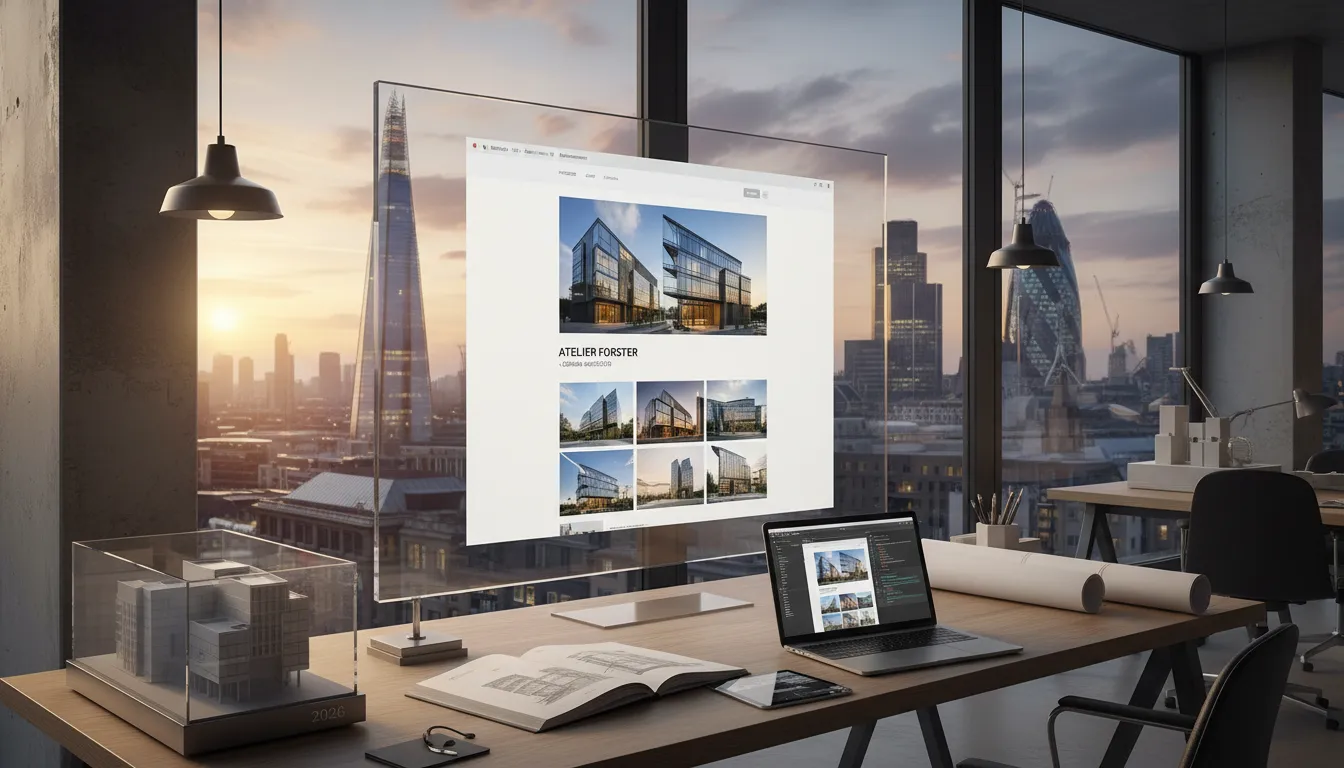
Your photography is exceptional. But if your potential clients can’t find you online or navigate a poorly designed website, your talent remains invisible. This is the reality facing countless wedding and commercial photographers in London today. According to recent industry data, 75% of photographers admit their websites don’t adequately showcase their work or convert visitors into inquiries. Even worse, slow-loading sites and non-mobile-responsive designs cost photographers an estimated 40% of potential bookings annually.
The solution isn’t complex. A professionally designed photography website—built specifically for how photographers work and how clients browse portfolios—can transform your business. Whether you’re a wedding photographer looking to book more ceremonies or a commercial photographer chasing corporate clients, your website is your most powerful marketing tool. It works 24/7, builds credibility, and drives qualified inquiries directly to your inbox.
This guide covers everything you need to know about professional web design for photographers in London. We’ll walk you through what makes a photography website effective, the key features you need, real-world examples from successful London photographers, and exactly how to get started with a site that goes live in just 7 days.
What Makes a Photography Website Different from Standard Web Design
A photography website isn’t just a portfolio gallery with a contact form. It’s a specialized sales tool designed around how photography clients actually shop for photographers. Understanding these differences is crucial before you invest in a website.
Image-First Design Philosophy
Wedding and commercial photography websites must prioritize visual impact above everything else. Where standard business websites might dedicate 60% of space to text, photography sites reverse this ratio. Your images should occupy 70-80% of the visible space. This means:
– Large, high-resolution image galleries that load without compression artifacts
– Minimal text that doesn’t compete with your photography
– White space that gives images breathing room
– Fast loading times despite high-resolution image files
– Mobile optimization that doesn’t sacrifice image quality
Client Psychology and Browsing Behavior
Photography clients browse websites differently than other service seekers. They’re not reading detailed service descriptions—they’re making gut-level decisions based on visual style within seconds. Research shows photography clients spend an average of 8 seconds on a homepage before deciding to explore further or leave. This means your design must immediately communicate your photographic style, quality level, and specialization (wedding vs. commercial).
Portfolio Organization Matters
Wedding photographers need to organize portfolios by wedding type (traditional, modern, small, destination). Commercial photographers need to organize by industry (corporate, product, architectural, fashion). Generic gallery layouts don’t convey expertise. A photographer specializing in luxury weddings looks fundamentally different from one specializing in intimate elopements, and your website structure should make this immediately clear.
Trust-Building Elements
Photography clients invest significant money and emotion in hiring photographers. Your website must build trust through:
– Client testimonials with names and photos
– Published work in recognizable publications
– Awards and recognitions
– Clear pricing (even price ranges reduce bounce)
– Professional about-me section with credentials
– Genuine contact information
The Essential Features Your Photography Website Must Have
Building a photography website without understanding core features is like buying a camera without knowing which settings matter. Here are the non-negotiable elements every successful photography portfolio site includes.
Portfolio Gallery System
Your portfolio is the heart of your website. It must showcase your best work in a way that’s easy to navigate and impossible to ignore. The best photography portfolio systems include:
Multiple Gallery Views: Clients should be able to view images in full-screen slideshow mode, grid layout, and individual image view. They need flexibility to explore work the way that feels natural to them. A wedding client might want to see an entire wedding story in slideshow, then dive deeper into specific moments in grid view.
Fast Image Loading: Large, high-resolution images are essential, but slow loading kills user experience. Professional photography websites use intelligent image compression, lazy loading, and content delivery networks (CDNs) to serve beautiful images in under 2 seconds. This is non-negotiable—websites that take 5+ seconds to load lose 75% of potential clients before your images even appear.
Mobile Optimization: Over 60% of photography website traffic comes from mobile devices. Your gallery must function flawlessly on phones and tablets. This means:
– Responsive image scaling that looks perfect on any screen size
– Touch-friendly navigation with easy swiping between images
– Proper aspect ratio handling so images never appear distorted
– Mobile-fast loading times (different requirements than desktop)
Filtering and Organization: Wedding photographers should be able to filter by wedding style, season, or venue type. Commercial photographers need to filter by industry and project type. This helps visitors find the exact work most relevant to their needs, increasing the likelihood they’ll see examples that align with their vision.
Contact and Booking System
A beautiful portfolio means nothing if potential clients can’t easily contact you or book a consultation. Your website needs:
Simple Contact Form: This should ask for only essential information (name, email, phone, event date, brief message). Every additional field reduces completion rates by 5-10%. Keep it under 5 fields.
Contact Information Visibility: Phone number and email should appear in multiple places (header, footer, contact page). Make it obvious. Hidden contact information costs bookings.
Booking System Integration: Depending on your business model, you might need:
– Calendar availability display so clients can see when you’re booked
– Deposit payment collection directly from your site
– Automated email responses confirming inquiry receipt
– Integration with your CRM or scheduling software
Response Time Expectations: Set clear expectations about when clients will hear back (e.g., “We respond to all inquiries within 24 hours”). This builds trust and manages expectations.
About / Meet the Photographer Section
Clients hire photographers they connect with emotionally. Your about section should showcase your personality and build credibility. This section typically includes:
Professional Headshot: A high-quality photo of you (or you and your team if applicable). This matters far more than photographers realize—it builds personal connection and trust.
Your Story: 150-250 words about how you got into photography, what drives your work, and why you specialize in your particular niche. Authenticity matters more than perfection.
Credentials and Experience: Years in business, notable clients, publications, awards, certifications, and education. If you’ve been featured in bridal magazines, published in commercial industry publications, or have notable clients, mention it.
Values and Approach: How do you work? What’s your philosophy? (“I believe in capturing authentic moments” or “We specialize in high-end commercial imagery that sells products”). Help clients understand what makes your approach different.
Testimonials and Social Proof
One paragraph of carefully chosen testimonials does more for conversion than pages of your own marketing copy. Your website should feature:
Client Testimonials with Photos: Include the client’s name, what they paid for (e.g., “wedding photography”), and their quote. If possible, include a photo of them. Testimonials with photos are 50% more trusted than text-only testimonials.
Minimum Threshold: Feature at least 5-6 strong testimonials. Fewer than this looks like you don’t have many satisfied clients.
Specific Outcomes: The best testimonials mention specific results (“I cried when I saw our wedding photos—every moment captured perfectly”) rather than generic praise (“Great photographer!”).
Published Work Mentions: If your work has appeared in photography publications, bridal magazines, or commercial media, mention this prominently. This is powerful social proof that validates your expertise.
Step-by-Step: Building Your Professional Photography Website
Now that you understand what matters, let’s walk through the actual process of creating a photography website. For photographers in London wanting to launch quickly without technical headaches, the process breaks down into clear stages.
Stage One: Define Your Niche and Visual Brand (Days 1-2)
Before any design work begins, get crystal clear on who you are and what you offer. This shapes every design decision that follows.
Wedding photographers: Determine your specialization. Are you:
– Luxury wedding photographer (average spend £3,000-5,000+)
– Affordable wedding photographer (average spend £1,000-2,000)
– Elopement specialist (micro-weddings, intimate ceremonies)
– Destination wedding photographer
– Same-sex wedding specialist
– Cultural/religious specialization
Commercial photographers: Identify your industries:
– Corporate photography (headshots, events, team photos)
– Product photography (e-commerce, catalog, marketing)
– Architecture and real estate photography
– Fashion and lifestyle photography
– Food and hospitality photography
– Industrial/manufacturing photography
Your niche narrows your market but dramatically increases conversion rates. A “photographer serving everyone” converts fewer clients than “luxury wedding photographer specializing in South Asian ceremonies in London.”
Define Your Visual Brand: Look at your best work across your portfolio. What common visual themes exist? Are your photos warm and golden-toned or bright and clean? Moody and atmospheric or bright and airy? Establish the top 5 words that describe your photographic style:
– Romantic, elegant, timeless, romantic, candid
– Bold, colorful, modern, energetic, creative
– Natural, authentic, genuine, unposed, organic
Your website’s design, color palette, and typography should reinforce these words. A photographer who describes their work as “bold and energetic” shouldn’t have a muted, minimal website. Visual consistency builds brand recognition.
Stage Two: Gather and Curate Your Portfolio (Days 3-4)
Most photographers have thousands of images. Your website needs hundreds of carefully selected images.
Curate Ruthlessly: Select only your absolute best work. Your website portfolio should represent the top 5-10% of your photography. The rule: if you wouldn’t print it large and hang it on your wall, it doesn’t belong on your website. Poor images damage credibility more than limited images.
Organize by Categories:
For wedding photographers, create galleries like:
– Bridal Preparation
– Ceremonies
– Receptions
– Details (rings, flowers, decor)
– Couple Portraits
– Family Photos
For commercial photographers:
– Corporate Headshots
– Corporate Events
– Product Photography
– Commercial Shoots (by industry)
– Creative Projects
Prepare Images Technically: All images should be:
– Optimized for web (compressed for fast loading, not reduced in visual quality)
– Consistent size and aspect ratio within galleries
– Named logically in your file system
– Backed up securely (cloud storage minimum)
Create Captions: For commercial work, include brief captions explaining the project type, client industry, or production details. This helps potential clients understand the scope and sophistication of your work.
Stage Three: Develop Your Copy and Messaging (Days 3-5)
While others handle design, you’re responsible for the words. Here’s what you need to write:
Homepage Headline (5-10 words maximum):
– “Luxury Wedding Photography for London’s Finest”
– “Corporate Photography That Tells Your Brand Story”
– “Award-Winning Commercial Photographer in London”
Homepage Subheading (1-2 sentences, 15-25 words):
Expand slightly on your headline with a client benefit rather than a feature.
– “Capturing authentic moments at London’s most elegant venues.”
– “Professional corporate photography that elevates your brand.”
About Section (200-300 words):
Write genuinely about your journey, your approach, and why you specialize in your niche. This should feel like a conversation, not marketing speak.
Portfolio Introduction Text (50 words each for gallery categories):
Briefly introduce each portfolio section. For wedding photographers: “Each wedding tells a unique story. Here’s a selection of ceremonies, receptions, and moments from 2023’s most beautiful celebrations.” For commercial photographers: “Headshots that represent your professional brand with clarity and authenticity.”
Services and Process Page (300-400 words):
Detail your services and process. Walk clients through exactly what happens from initial inquiry to final delivery. This builds confidence and answers common questions.
Contact Page Copy (100-150 words):
Friendly, confident, and clear. Example:
“Ready to book? We love working with couples/clients who value authentic photography and meaningful moments. Get in touch to discuss your wedding/project and see if we’re the right fit. We typically respond within 24 hours.”
Stage Four: Design and Development (Days 5-7)
This is where professional web designers shine. The best photography websites for London photographers are built with:
Purpose-Built Platform: Not all website builders are equal for photography. Squarespace, Format, and Wix have excellent photography templates. WordPress with Divi or Elementor works well for photographers wanting more control. Avoid generic builders that don’t optimize for image-heavy sites.
Professional Design Elements:
– Serif fonts for elegance (wedding photographers) or sans-serif for modern (commercial photographers)
– Color palette limited to 3-4 colors maximum (too many dilute brand)
– Consistent spacing and layout rhythm
– Clear visual hierarchy so the portfolio is always the star
Speed Optimization: This is crucial. Your website should load fully in under 3 seconds even on slower connections.
SEO Foundation: Basic SEO setup including:
– Page titles and meta descriptions
– Alt text for all images
– Mobile responsiveness
– Fast loading times (covered above)
– Schema markup for photographers
Testing: The website goes through functional testing on multiple devices (iPhone, iPad, Android, desktop) and browsers (Chrome, Safari, Firefox, Edge) before going live.
Stage Five: Launch and Ongoing Optimization (Day 7+)
Your website goes live. But this isn’t the end—it’s the beginning. From day one, you should:
Monitor Performance:
– Track visitor numbers and traffic sources
– Monitor bounce rate (should be below 50% for photography sites)
– Track which portfolio sections get viewed most
– Monitor inquiries and which pages they came from
Collect Feedback:
– Ask recent clients what they thought of your website
– Monitor form submissions to ensure they’re reaching your inbox
– Get friends and family to test the site and provide honest feedback
Regular Updates:
– Add new portfolio work every 3 months minimum
– Keep testimonials current and add new ones regularly
– Update your about section as your experience grows
– Refresh the homepage occasionally to keep the site looking current
Essential Tools and Investment Required
Building a professional photography website involves multiple components. Here’s the realistic investment and tool breakdown.
Platform Options and Costs
| Platform | Monthly Cost | Best For | Pros | Cons |
| ———- | ————- | ———- | —— | —— | <br /> |
|---|---|---|---|---|---|
| Squarespace | £12-27/month | Wedding & Commercial Photographers | Beautiful templates, excellent for portfolios, great customer support | Less customization than WordPress | |
| Format | £8-29/month | Serious Photographers | Built specifically for photographers, excellent portfolio features | More photography-focused than general marketing | |
| Wix | £11-27/month | Budget-conscious photographers | Affordable, drag-and-drop builder, good for small portfolios | Can feel generic, speed issues with large galleries | |
| WordPress + Hosting | £5-15/month | Photographers wanting control | Maximum customization, thousands of plugins, scalable | Requires more technical knowledge | |
| Showit | £19/month | Designers & photographers | Beautiful, fully customizable, good for high-end brands | Steeper learning curve |
Additional Tools and Services Needed
Domain Name: £10-15/year
Your website should have a professional domain (yourname.co.uk or yourlondonphotography.com), not yourlondonphotography.wordpress.com.
Email Hosting: £50-120/year
Professional email addresses (you@yourphotography.co.uk) matter for credibility. Your website builder may include this, but if not, services like Google Workspace or Zoho Mail provide excellent email hosting.
SSL Certificate: Often included free with website builders
This encrypts visitor data and is required for e-commerce functionality.
Contact Form Service: £0-30/month
Services like Typeform or Contact Form 7 (WordPress) handle form submissions and automation.
Image Optimization Tools: £0-20/month
Tools like TinyPNG or ImageOptim reduce file sizes without quality loss, crucial for site speed.
Analytics: Free (Google Analytics)
Track visitor behavior and identify what’s working.
Backup Service: £5-20/month (or