As a busy business owner in London, you understand the importance of a well-functioning website. It’s the digital face of your company, and it needs to be maintained and updated regularly to ensure it remains secure, efficient, and aligned with your brand. However, the world of website maintenance can be complex, with various tasks and services to consider.
In this comprehensive guide, we’ll explore the essential elements of website maintenance in London, helping you understand what’s included, what’s not, and how to choose the right maintenance plan for your business.
What is Website Maintenance?
Website maintenance refers to the ongoing care and upkeep of your website, ensuring it remains up-to-date, secure, and performing at its best. This includes a wide range of tasks, such as software updates, content management, backups, and security monitoring.
In the fast-paced world of digital marketing, a well-maintained website can make all the difference in your business’s success. It not only improves the user experience for your customers but also helps you stay ahead of your competition and maintain a strong online presence.
Key Components of Website Maintenance in London
Effective website maintenance in London typically includes the following key components:
1. Software Updates: Regularly updating your website’s content management system (CMS), plugins, and other software components to ensure they are running the latest versions and addressing any security vulnerabilities.
2. Content Management: Keeping your website’s content fresh and up-to-date, including blog posts, product information, and other dynamic content.
3. Backup and Restoration: Implementing a reliable backup system to protect your website’s data and being able to quickly restore it in the event of an issue or emergency.
4. Security Monitoring: Continuously monitoring your website for potential security threats, such as hacking attempts, malware, or other malicious activity, and taking immediate action to mitigate any risks.
5. Performance Optimization: Ensuring your website loads quickly, is mobile-friendly, and continues to perform at a high level, even as your business and online presence grows.
6. Analytics and Reporting: Tracking key metrics and providing regular reports on your website’s performance, user behavior, and overall effectiveness.
7. Ongoing Maintenance and Support: Addressing any issues or concerns that arise, responding to your questions or requests, and providing general maintenance and support services.

Website Maintenance Tiers and Pricing in London
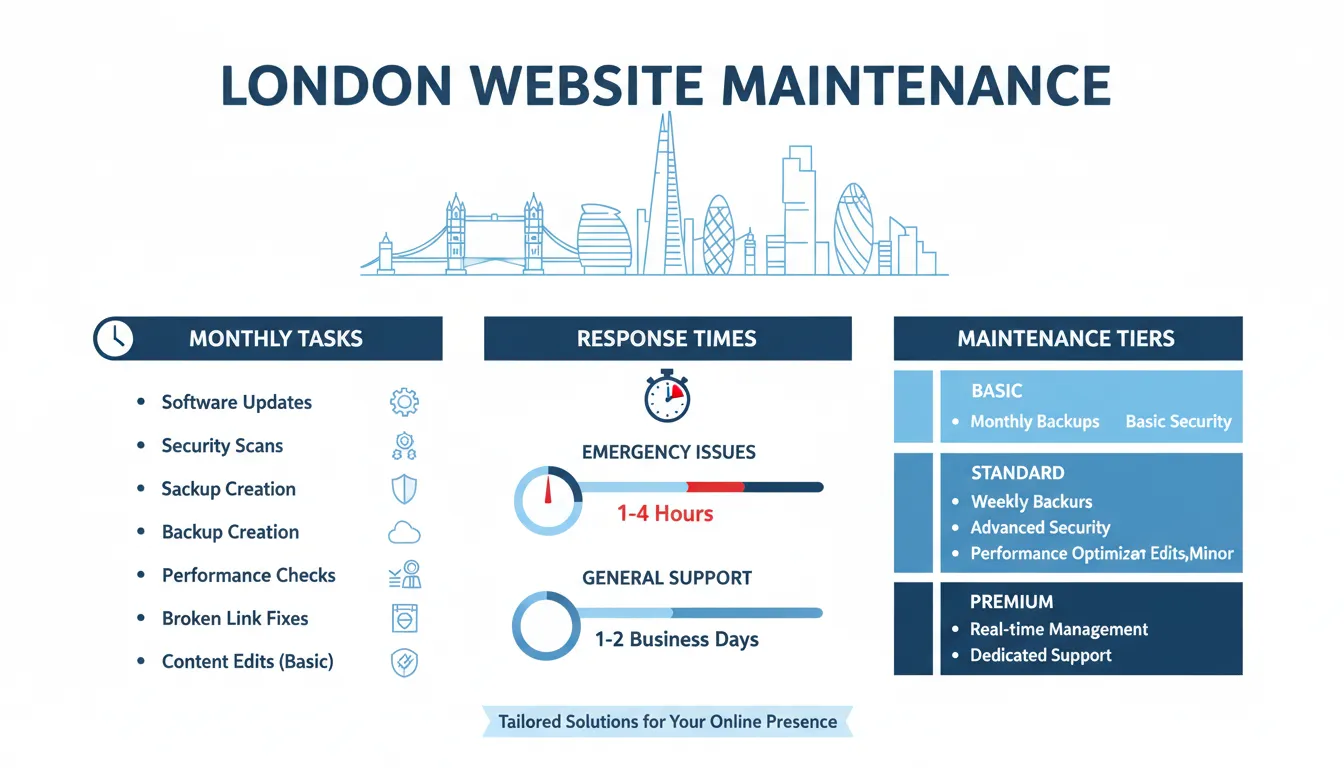
When it comes to website maintenance in London, there are typically three main tiers of service:
1. Basic Maintenance: This tier usually includes monthly software updates, basic security monitoring, and limited support.
2. Standard Maintenance: In addition to the basic services, this tier often includes more comprehensive security monitoring, regular content updates, performance optimization, and more robust support.
3. Premium Maintenance: The premium tier typically offers the most comprehensive suite of services, including advanced security measures, ongoing website improvements, custom development, and a dedicated account manager.
The pricing for these tiers can vary depending on the provider, the size and complexity of your website, and the level of service you require. On average, basic website maintenance in London can start at around £50 per month, while the standard and premium tiers can range from £100 to £500 or more per month.
It’s important to carefully evaluate your needs and budget to choose the right maintenance plan for your business. While the basic tier may be sufficient for some, more complex or high-traffic websites may require the additional services and support offered in the standard or premium tiers.
Key Takeaways
What’s Not Included in Website Maintenance?
While website maintenance covers a wide range of essential tasks, there are some things that are typically not included in maintenance packages:
1. Major Website Redesigns: If your website requires a significant overhaul or a complete redesign, this would generally fall outside the scope of a standard maintenance plan and would require a separate project.
2. Large-Scale Content Updates: While routine content management is typically included, large-scale content updates or content creation may be considered an additional service.
3. Custom Development: If your website requires complex custom development or integration with other systems, this would likely be billed as a separate project.
4. Hosting and Domain Management: The hosting of your website and the management of your domain name are usually provided separately from the maintenance plan.
5. Search Engine Optimization (SEO): While some maintenance providers may offer basic SEO services, more comprehensive SEO strategies and campaigns are often considered a separate service.
It’s important to understand the limitations of your website maintenance plan and to discuss any additional services or projects with your provider to ensure you’re getting the full scope of support your business needs.

Real-World Examples and Case Studies
To better illustrate the value of website maintenance in London, let’s consider a few real-world examples and case studies:
Case Study 1: Small Retail Business
A small clothing boutique in London had been relying on an outdated website that was slow, difficult to navigate, and not mobile-friendly. They opted for a standard website maintenance plan, which included monthly software updates, security monitoring, and performance optimization. Within a few months, they saw a significant increase in website traffic and a 15% boost in online sales, thanks to the improved user experience and enhanced search engine visibility.
Case Study 2: Local Service Provider
A plumbing company in London had a well-designed website, but they were struggling to keep up with the constant software updates and security patches. They signed up for a premium maintenance plan, which provided them with a dedicated account manager and a comprehensive suite of services. The account manager worked closely with the company to identify and address any issues, implement security best practices, and explore new ways to optimize their website’s performance. This resulted in a 20% increase in lead generation and a significant reduction in website-related support inquiries.
Case Study 3: Growing E-commerce Business
A London-based e-commerce business was experiencing rapid growth, and their website was struggling to keep up with the increasing traffic and transaction volume. They partnered with a website maintenance provider that offered advanced performance optimization, scalability, and customized development services. This allowed the business to seamlessly handle the growing number of customers, streamline their checkout process, and integrate their website with their inventory management system. As a result, they saw a 30% increase in revenue and a significant improvement in customer satisfaction.
These examples demonstrate the tangible benefits of investing in comprehensive website maintenance in London, from improved user experience and increased sales to enhanced security and reduced support demands.
FAQ
1. How often should I have my website maintained?
The frequency of website maintenance can vary depending on the size and complexity of your website, as well as your business needs. Most providers recommend a monthly or quarterly maintenance plan to ensure your website stays up-to-date and secure.
2. What are the typical response times for website maintenance issues?
Response times can vary depending on the maintenance plan you choose. Basic plans may have longer response times, while premium plans often offer faster response times, sometimes within a few hours for critical issues.
3. Can I customize my website maintenance plan?
Yes, many website maintenance providers in London offer the flexibility to customize your plan based on your specific needs and budget. This can include adjusting the scope of services, the frequency of updates, or the level of support.
4. How do I know if I need to upgrade my website maintenance plan?
If you’re experiencing frequent website issues, security concerns, or a significant drop in website performance, it may be a sign that your current maintenance plan is not sufficient. It’s a good idea to regularly review your website’s needs and the services included in your plan to ensure you’re getting the right level of support.
5. What should I look for when choosing a website maintenance provider in London?
When selecting a website maintenance provider in London, consider factors such as their track record, the scope of services they offer, their response times, and their level of expertise. It’s also important to ensure they have experience working with websites similar to yours and can provide references from satisfied clients.
Conclusion
Maintaining a high-performing, secure, and up-to-date website is essential for the success of any business in London. By understanding the key components of website maintenance and the different tiers of service available, you can choose the right plan to support your business needs and achieve your online goals.
Whether you’re a small retail business, a local service provider, or a growing e-commerce company, investing in comprehensive website maintenance in London can lead to tangible benefits, from increased sales and improved user experience to enhanced security and reduced support demands.
Don’t let your website become an afterthought – take the first step towards better website maintenance and unlock the full potential of your online presence. [Get maintenance pricing today](https://wdlon.com/web-design-london-pricing-what-you-actually-pay-in-2026/).